
Application Cases
Steam Boiler Pressure and Temperature Monitoring: Catching Drift Before the Safety Valve Does
A process plant's steam boiler ran on a local pressure gauge and a dial thermometer. A 250°C-rated pressure transmitter and mineral-insulated thermocouples now feed live trends, alarms and the safety interlock.
A steam boiler is one of the few places in a plant where a measurement error is both a safety issue and an efficiency issue at the same time. This anonymized case follows a mid-size process plant that ran its boiler on eyesight — and what changed when pressure and steam temperature became live, logged signals instead of hourly readings.
The situation
The plant runs a small industrial steam boiler that supplies process steam for heating and production, with a steam header feeding several users across the site. For years the boiler was operated the traditional way: a local Bourdon pressure gauge on the steam drum, a dial thermometer on the steam line, and an operator walking the rounds once an hour to write the readings down. The control system had no live pressure or temperature signal from the boiler at all — the safety interlock and the burner control relied on separate, older switches, and nobody could look back at what pressure or steam temperature had done overnight.
The challenge
Turning gauge readings into reliable signals meant instruments that survive the environment they measure. Steam at the header runs hot enough to destroy an ordinary pressure transmitter, and the steam line and flue gas are exactly the kind of hot, vibrating service that kills a poorly chosen thermocouple. The plant also needed the new signals to feed its existing PLC inputs (4–20 mA), to be stable enough to trust for alarming — a drifting pressure reading on a boiler is worse than no reading, because it looks like information — and to be installed without a long shutdown, since the boiler could only be taken down for a short maintenance window.
The solution
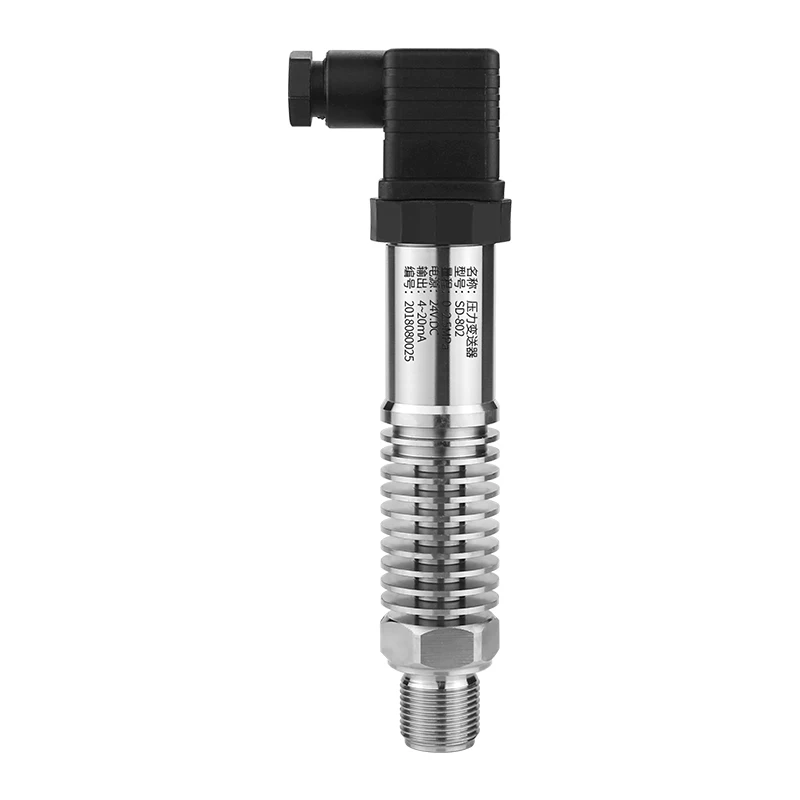
A high-temperature pressure transmitter rated for 250 °C steam was installed on the steam header, mounted with a proper cooling loop so the sensing element never sees full steam temperature directly. Mineral-insulated Type K thermocouples were fitted on the steam line and on the flue gas outlet, with head-mounted 4–20 mA temperature transmitters at each point so the long cable runs back to the panel carry a robust current signal. The PLC now trends drum pressure and steam temperature continuously, with a high-pressure alarm feeding the safety chain and a low steam-temperature alarm that flags wet steam or a failing steam trap before it shows up as a process problem.
The result
The hourly rounds are no longer the plant's only record of the boiler. Operators watch a live trend, and the first thing it caught was a slow pressure creep over several days that the hourly gauge readings had smoothed over — traced to a pressure-reducing valve that was no longer seating properly, fixed before it became a relief-valve lift. The steam-temperature trend also earned its keep: a gradual temperature drop on one header branch pointed to a trap passing steam, found from the data rather than from a cold process complaint. The boiler's safety case is now fed by instruments rated for the service, and the plant has a continuous record to show for it.
The lesson generalizes beyond boilers: measure the variables the safety case actually depends on, with instruments that survive the process, and trend them — a gauge you glance at once an hour cannot tell you what happened between glances.
Products used: High-Temperature Pressure Transmitter · Thermocouple Sensors · Temperature Transmitter Modules
Industry: Process steam / industrial heating
Related products: High-Temperature Pressure Transmitter · Thermocouple Sensors · Temperature Transmitter Modules